

The beauty sector is shifting rapidly. Consumers want more than just aesthetics. They demand absolute certainty that their cosmetics are safe for their bodies and gentle on the environment. This profound shift forces sustainable packaging to the top of the priority list for brands worldwide. True environmental responsibility goes beyond the outer glass bottle. It dives deep into the chemical formulas inside. For companies operating in the competitive nail care sector, merging eco-friendly containers with clean ingredients is no longer just a marketing tactic. It is a fundamental survival requirement. This guide breaks down current packaging innovations, their integration with clean formulations, and actionable steps brand owners must take to stay ahead of the curve.
Circular Economy Focus: Refillable systems and Post-Consumer Recycled materials minimize the environmental footprint by keeping plastics out of landfills.
Smart Design Reduces Waste: Forward-thinking brands utilize minimalist layouts and QR codes to replace bulky paper inserts, significantly cutting material waste.
Inside-Out Sustainability: Green packaging requires clean ingredients. This requirement drives massive global demand for safer cosmetic chemistry.
Strict Compliance: Maintaining updated regulatory paperwork and monitoring restricted chemical lists is strictly required for global market access.
Tailored Chemical Solutions: Custom formulation ensures that active gels do not chemically degrade new, innovative bio-plastics.
Buyer psychology within the personal care sector has changed fundamentally over the past decade. Today's buyers scrutinize ingredient lists. They demand total supply chain transparency before ever reaching the checkout page. This highly educated consumer uses digital tools to verify whether sustainability claims are backed by hard data or just empty rhetoric. Consequently, brands failing to adopt transparent, evidence-based practices risk losing market share to agile, eco-conscious competitors.
Historically, the cosmetic world relied on single-use plastics. Basic recyclability served as the highest standard for environmental responsibility. Yet, recycling rates for small cosmetic components remain notoriously low due to mixed materials and residual polish contamination. In response, the industry is rapidly transitioning toward a robust circular economy. In this regenerative model, materials are engineered to be reused, repurposed, or safely returned to nature without degrading the ecosystem. This involves rigorous lifecycle assessments, ensuring the end-of-life phase of a polish cap does not contribute to ocean pollution.
Adopting sustainable practices is a highly effective business strategy. Empirical market data suggests that brands demonstrating genuine environmental commitment experience stronger customer retention. For B2B and B2C beauty enterprises, transparent green initiatives build profound trust. This trust ultimately drives conversions, secures premium retail placements, and stabilizes long-term revenue against impending environmental regulations.
Recent market analyses reveal a fascinating trajectory in beauty packaging. The conversation has moved from simply reducing plastic to entirely rethinking product delivery. Search trends show a massive surge in queries for zero-waste cosmetics and refillable beauty over the past year. Furthermore, industry experts note a definitive shift toward mono-materials—packaging made entirely from a single type of plastic or metal, making the recycling process highly efficient. Aluminum is also making a massive comeback due to its ability to be recycled infinitely without structural degradation. Let us examine the specific innovations leading this charge.
Luxury and indie salons are increasingly adopting refillable packaging models. Instead of discarding an entire heavy glass jar after a single use, consumers purchase a durable outer container once. When the product runs out, they buy lightweight refill pods. This system drastically minimizes single-use waste and lowers shipping weights. In practical terms, imagine a nail technician simply snapping a fresh color cartridge into a premium, reusable brush handle. This modular approach is the future of professional application.
Post-Consumer Recycled materials, commonly known as PCR, give a vital second life to existing plastics and glass. Integrating high percentages of PCR prevents existing waste from entering landfills. Advancements in manufacturing technology have vastly improved the aesthetic quality of these materials. Today, companies can maintain a flawless, premium look for their gel polish caps while strictly adhering to environmental standards.
Material science innovations have introduced a wave of packaging derived from renewable resources like bamboo, mushroom mycelium, and sugarcane bioplastics. These organic composites are engineered to break down naturally under specific industrial composting conditions. While plant-based materials represent a critical step toward net-zero impact, they require careful handling. For instance, a secondary outer box made of mushroom mycelium offers excellent shipping protection and can be tossed directly into a home compost bin.
The concept of less is more drives the minimalist packaging trend. Brands are actively eliminating unnecessary secondary packaging, such as bulky outer cartons and plastic cellophane wrappers. Specifically, smart packaging utilizes digital solutions to bridge the information gap. By printing QR codes directly on the primary bottle, brands direct consumers to a digital landing page containing comprehensive usage instructions and recycling guidelines. This approach eliminates paper waste while providing an interactive platform for consumer engagement.
Eco-conscious consumers demand holistic integrity. If a product features a biodegradable container but holds harsh, outdated, or toxic chemicals inside, buyers feel misled. This disconnect is commonly labeled as greenwashing. It can severely damage a brand's reputation overnight. To build genuine trust, true sustainability requires the formulation inside the bottle to perfectly mirror the environmental promise of the packaging outside.
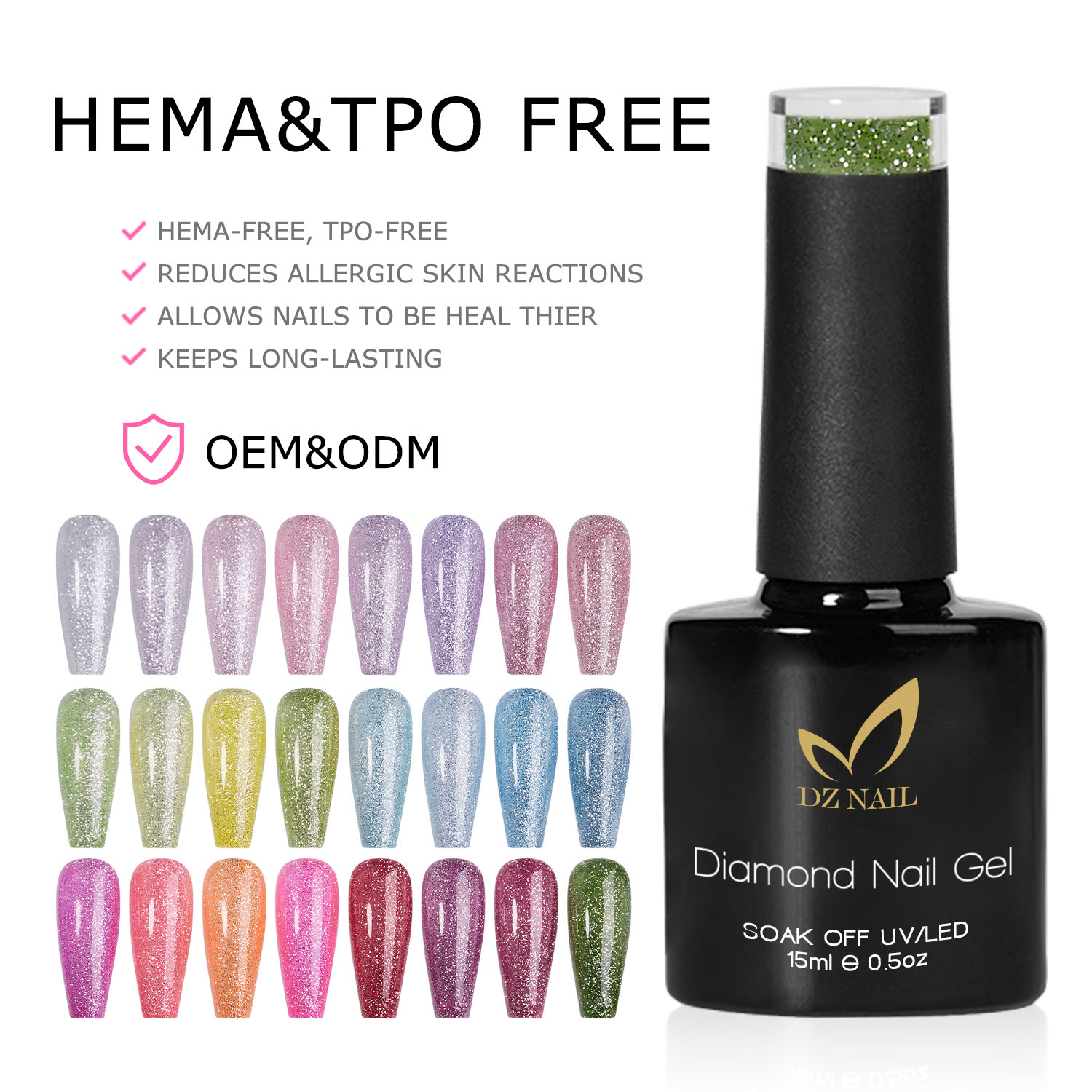
In the nail care sector, traditional formulas relied on specific curing agents and monomers to achieve quick drying times. However, growing health concerns regarding skin sensitization and allergic contact dermatitis have prompted a massive shift in formulation standards. By offering HEMA-Free and TPO-Free Gel Polish, brands directly address consumer health anxieties. Formulating without Hydroxyethyl Methacrylate and Trimethylbenzoyl Diphenylphosphine Oxide aligns flawlessly with a wellness-focused message. For example, modern diamond flash gel polishes achieve brilliant, highly pigmented finishes and cure under standard LED lamps in just 60 seconds, all without relying on these traditional sensitizers.
Global regulatory bodies are becoming increasingly stringent regarding cosmetic safety. Directives from the European Union and recent updates from the FDA actively crack down on toxic chemicals in personal care products. Consequently, brands must proactively audit their supply chains. You must ensure your product lines are completely free from Restricted Substances in Gel Polish Formulations. Failure to navigate these complex restrictions risks consumer health, severe legal penalties, and devastating product recalls.
A frequent, yet often overlooked, engineering challenge is the chemical interaction between formulas and their containers. Biodegradable materials and eco-friendly bioplastics possess different barrier properties compared to traditional virgin plastics. When exposed to harsh solvents found in standard nail gels, these sustainable materials can warp, degrade, or leach. If a highly volatile liquid eats through the structural integrity of a bio-plastic bottle, the product becomes unsellable. Therefore, achieving perfect chemical compatibility is just as critical as the aesthetic design.
To solve these complex compatibility issues, brands must invest in specialized research and development. Engaging in Custom Nail Gel Formula Development allows companies to create stable, high-performance products that interact safely with innovative packaging. Expert chemists meticulously adjust the volatility, pH, and solvent profiles of the gel. This precise engineering ensures the liquid remains completely inert against PCR plastics or plant-based materials, guaranteeing a stable shelf life.
Beyond solving packaging compatibility, custom formulations offer a significant strategic advantage. Instead of relying on generic white-label products, custom development allows brands to dictate exact color palettes, viscosity levels, and clean-ingredient profiles. When a brand can definitively claim their product is uniquely formulated for both exceptional salon-quality performance and environmental safety, they secure a distinct competitive edge.
Choosing the right packaging and formula combination requires technical precision. You cannot simply pour a standard highly volatile gel into a cornstarch-based bottle and hope for the best. Here is a practical framework for brand owners to evaluate their product architecture.
Packaging Material | Recommended Formula Profile | Compatibility Risk Level | Ideal Application |
|---|---|---|---|
100% PCR PET Plastic | Low-solvent, HEMA-Free Gel | Low | Standard color coats and base gels |
Glass with Bamboo Cap | Very Low | Premium salon lines requiring high barrier protection | |
Sugarcane Bioplastic | Custom TPO-Free, pH-balanced | Medium (Requires stability testing) | Retail-focused lightweight bottles |
Refillable Aluminum Pods | Highly pigmented Diamond Flash Gels | Low | Eco-luxury professional kits |
When selecting your product lineup, analyze the physical properties of the liquid. A high-viscosity diamond flash gel with a fast LED cure time requires a container that blocks 100 percent of ambient UV light. Aluminum or thickly coated PCR glass provides this necessary barrier while remaining highly recyclable. Conversely, highly volatile liquid prep coats might require specialized inner linings if you opt for bio-plastics, preventing solvent evaporation over time.
In an era hyper-aware of greenwashing, making verbal claims about safety is entirely insufficient. Retailers and regulatory bodies demand verifiable proof that a product is as clean as advertised. Transparent, easily accessible documentation forms the absolute foundation of brand credibility.
International sales require a comprehensive portfolio of legal and safety paperwork. Securing the proper Regulatory Documentation for Nail Products is non-negotiable. This typically includes Material Safety Data Sheets, which detail chemical properties and emergency handling protocols. It also includes Cosmetic Product Safety Reports, which are legally required for selling within the European Union. Accurate international ingredient listings and verified cruelty-free certifications are standard prerequisites for global market entry.
Navigating international cosmetics law is a resource-intensive process. Partnering with a manufacturer that inherently provides comprehensive regulatory support saves brand owners significant time and potential legal headaches. A streamlined B2B operation ensures all compliance documentation is generated concurrently with the manufacturing process. This efficiency allows for rapid, legally secure product launches across multiple global territories.
Selecting a B2B manufacturing partner is one of the most critical decisions a brand owner will make. Look far beyond basic pricing structures. Key capabilities to assess include a verifiable commitment to clean chemistry, the technical engineering ability to fill sustainable packaging without causing material degradation, and a fully transparent supply chain. A reliable manufacturer operates seamlessly as an extension of your own ethical standards.
For brands seeking to merge sustainable trends with cutting-edge nail products, partnering with an established industry leader is vital. DZ Nail Gel serves as a premier manufacturing partner, offering deep expertise in formulating high-performance cosmetics that meet modern eco-conscious demands. By prioritizing both chemical safety and packaging compatibility, they provide a highly secure foundation for brands aiming to lead the sustainable beauty sector.
A fragmented supply chain often leads to frustrating delays and severe quality control issues. Full-service manufacturers provide end-to-end solutions encompassing every single stage of product creation. From the initial stages of custom formula development to the final provision of essential regulatory paperwork, a comprehensive partner ensures a seamless launch. This integrated approach allows you to focus energy on marketing and distribution, fully confident that your eco-friendly product line is compliant and top-tier.
The future of the beauty industry is undeniably green. As packaging innovations continue to evolve, brands must adapt by embracing refillable systems, PCR materials, and smart minimalist designs. However, true industry leaders understand that sustainability is a holistic endeavor. By pairing eco-friendly containers with safe, innovative chemistry—such as HEMA-Free and TPO-Free options—and ensuring strict compliance with global regulatory standards, your brand builds deep, lasting trust with the conscious consumer. Now is the time to evaluate your product architecture and partner with forward-thinking manufacturers to develop custom, clean formulas that perform beautifully and actively protect our planet. Ready to elevate your brand with clean, compliant, and packaging-compatible nail products? Explore the extensive range of customizable solutions at DZ Nail Gel to find the perfect match for your sustainable vision.
The leading materials include refillable aluminum containers, Post-Consumer Recycled plastics, infinitely recyclable glass, biodegradable plant-based composites like mushroom mycelium, and minimalist designs that utilize QR codes to drastically reduce paper waste.
Consumers expect total transparency and holistic safety. Putting a toxic or outdated chemical mixture inside an eco-friendly bottle is widely considered greenwashing. Brands must ensure their internal formulas match the eco-conscious promise of their external packaging to maintain consumer trust and ensure technician safety.
Hydroxyethyl Methacrylate and Trimethylbenzoyl Diphenylphosphine Oxide are traditional curing agents used in gel polish. Clinical data has linked them to skin allergies and sensitization. Formulating without these specific chemicals creates a much safer, cleaner product for both professional nail technicians and everyday consumers.
Custom formula development allows chemists to engineer a unique product tailored specifically to the barrier properties of your chosen container. It ensures your gel polish remains chemically stable within sustainable materials, preventing any risk of the solvent degrading, warping, or leaking through the bio-plastic.
To sell cosmetics globally, you typically require Material Safety Data Sheets, Cosmetic Product Safety Reports, accurate ingredient listings, and proof of compliance with regional regulations like EU directives or FDA guidelines. A reputable manufacturing partner will assist in supplying this critical documentation.
Brands avoid greenwashing by ensuring all environmental claims are backed by verifiable data and third-party certifications. This means conducting proper lifecycle assessments on packaging, being fully transparent about ingredient sourcing, and ensuring that the physical product genuinely aligns with the marketing rhetoric.
Yes, when implemented correctly. Refillable systems significantly reduce single-use plastic consumption and lower carbon emissions associated with shipping heavy primary containers. However, the environmental benefit is only realized if the consumer actually retains and reuses the primary container multiple times.


